
CO2 Laser Marking Machine for Non-Metal Materials
Permanent, high-contrast marks on plastics, glass, wood, leather, and packaging — powered by a 30W RF metal tube CO2 laser with zero consumables and 20,000-hour service life.
Engineered for inline production lines and standalone workstations. Supports EtherNet/IP integration, variable data marking, and compliance with FDA, GMP, and GS1 traceability standards.
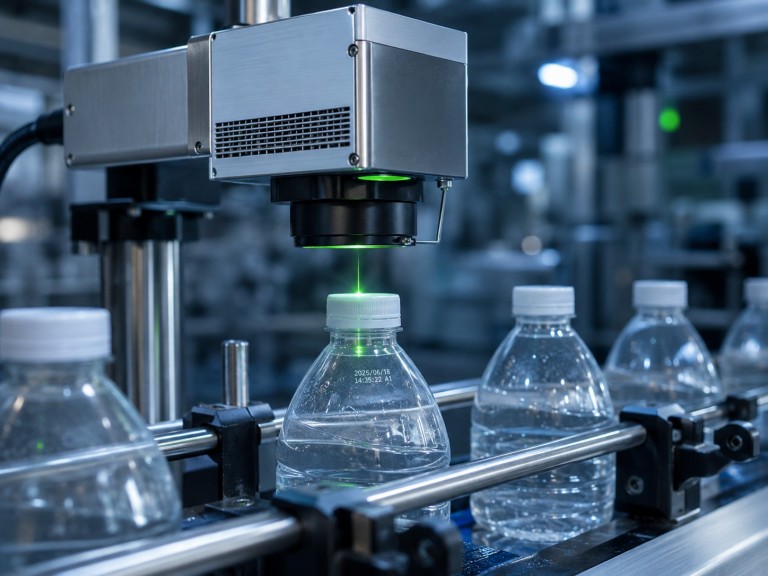
Why RF Tube CO2 Laser Outperforms Every Alternative
The CO2 laser operates at a 10.6µm infrared wavelength — the precise frequency at which organic and polymeric materials absorb energy most efficiently. This makes it the definitive choice for permanent marking on plastics, glass, wood, leather, cardboard, ceramics, rubber, and coated metals.
At the core of every Kales CO2 marking system is an RF metal tube — not a glass tube. RF excitation delivers a beam quality and consistency that glass tubes physically cannot match, translating directly into sharper marks, faster cycle times, and a decade of reliable production service before any maintenance is required.
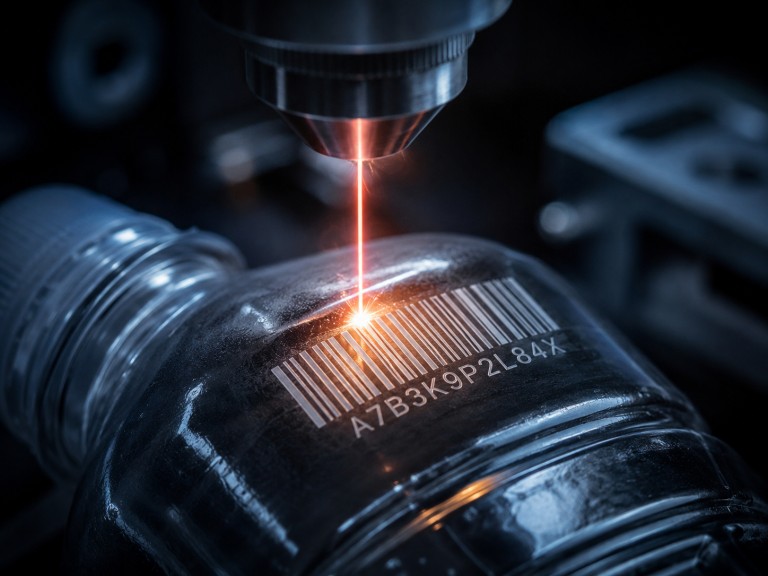
RF Metal Tube
Radio-frequency excited metal tube rated for 20,000 operating hours — 10× the lifespan of standard DC glass tubes, with zero electrode degradation.
Marking Precision
5× finer resolution than glass-tube systems. Produces razor-sharp barcodes, Data Matrix codes, micro-text, and intricate logos without edge blur.
Galvo Speed
High-speed galvanometer scanner delivers throughput up to 8× faster than glass-tube lasers — built for high-volume production lines without compromising quality.
Zero Consumables
No ink, no solvent, no ribbon. The laser source is the only marking element. Eliminate ongoing consumable procurement, waste disposal, and supply chain risk.
CO2 Laser Marking Machine — Model Specifications
All models ship with RF metal tube source, air-cooled design, galvo scanning system, and EtherNet/IP interface as standard. Select the power level matched to your production speed and material requirements.
| Parameter | KL-CO2-10 | KL-CO2-30 Recommended | KL-CO2-60 | KL-CO2-100 |
|---|---|---|---|---|
| Laser Power | 10W | 30W | 60W | 100W |
| Laser Source | RF Metal Tube | RF Metal Tube | RF Metal Tube | RF Metal Tube |
| Wavelength | 10.6µm | 10.6µm | 10.6µm | 10.6µm |
| Max Marking Speed | 7,000 mm/s | 10,000 mm/s | 10,000 mm/s | 10,000 mm/s |
| Precision | 0.01mm | 0.01mm | 0.01mm | 0.01mm |
| Standard Marking Field | 100 × 100mm | 150 × 150mm | 200 × 200mm | 300 × 300mm |
| Tube Service Life | 20,000h | 20,000h | 20,000h | 20,000h |
| Cooling Method | Air-cooled | Air-cooled | Air-cooled | Air / Water |
| Typical Applications | Light packaging, labels, moderate line speed | Food & beverage, pharma packaging, electronics | High-speed lines, wide-web packaging, tobacco | Heavy-duty industrial, deep engraving, ceramics |
| Interface | EtherNet/IP · RS-232 · USB | EtherNet/IP · RS-232 · USB · Wi-Fi | EtherNet/IP · Modbus TCP · RS-232 · USB | EtherNet/IP · Modbus TCP · RS-232 · USB |
All power ratings refer to average output power at the laser aperture. Actual marking speed varies by material, depth, and mark density. Contact our engineering team for application-specific cycle time calculations.
What Buyers Get Wrong About CO2 Laser Marking
Incorrect assumptions lead to wrong equipment choices, integration delays, and missed ROI. Here are the four misconceptions we encounter most frequently from industrial procurement teams.
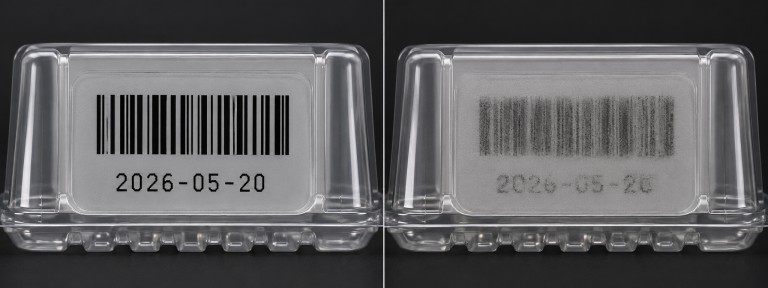
"CO2 Lasers Are Only for Hobbyist Engraving — Not Production Lines"
Entry-level desktop CO2 machines (glass tube, sub-5W) created this perception. Industrial RF-tube CO2 systems are engineered for continuous 24/7 production, with flying-laser configurations marking products at line speeds exceeding 900 m/min on packaging conveyors.
"A Glass Tube Laser Is Just as Good — the RF Tube Is a Marketing Claim"
The engineering difference is quantifiable: RF metal tubes deliver 20,000h service life vs 2,000h for glass; marking speeds of 10,000 mm/s vs 1,200 mm/s; and precision of 0.01mm vs 0.05mm. Glass tubes also suffer power drift over time, causing inconsistent mark contrast and barcode read-rate failures on production lines.
"CO2 Can Mark All Materials — Including Bare Metal"
CO2 lasers at 10.6µm are highly absorbed by organic and polymeric materials but largely reflected by bare metals such as stainless steel, aluminum, and copper. Selecting CO2 for bare-metal marking results in insufficient contrast, surface damage, or no mark at all. Fiber lasers are the correct technology for metals.
"Laser Marking Has a High Total Cost of Ownership vs. Inkjet"
The capital cost of a CO2 laser is higher than a CIJ inkjet printer, but total 5-year cost is substantially lower. Inkjet systems carry ongoing ink, solvent, filter, and nozzle costs. A well-maintained RF tube CO2 laser has virtually no consumables and minimal wear parts — with payback periods commonly under 2–3 years for high-volume lines.
Two Ways to Deploy a CO2 Laser Marking System
Whether you need a fully integrated inline solution for a high-speed packaging line or a flexible workstation for multi-SKU production, Kales provides a configured system — not just a machine.
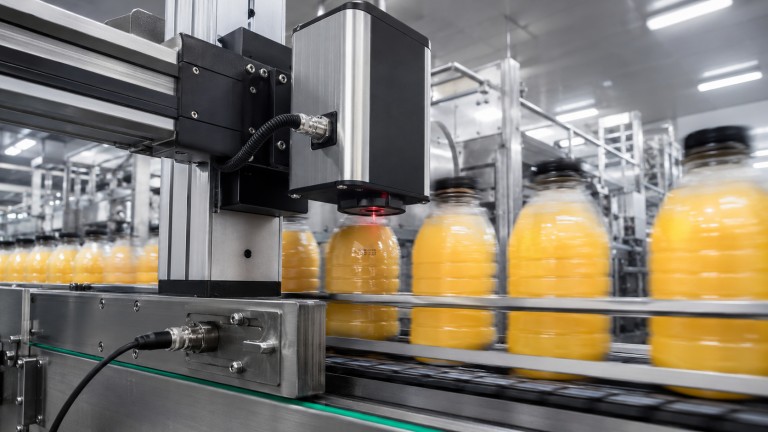
Configuration A — Inline Flying Laser
Fully integrated into your existing conveyor or packaging line. The laser marks products on-the-fly with zero line stoppage, synchronized to encoder signals from upstream equipment.
- Marks at conveyor speeds up to 900 m/min with consistent quality
- Encoder-synchronized triggering — no mechanical stops or product jam risk
- Compact laser head mounts directly to line framing or gantry
- Ideal for date codes, batch numbers, and expiry dates on packaging
- Supports multi-lane configurations for wide-web applications
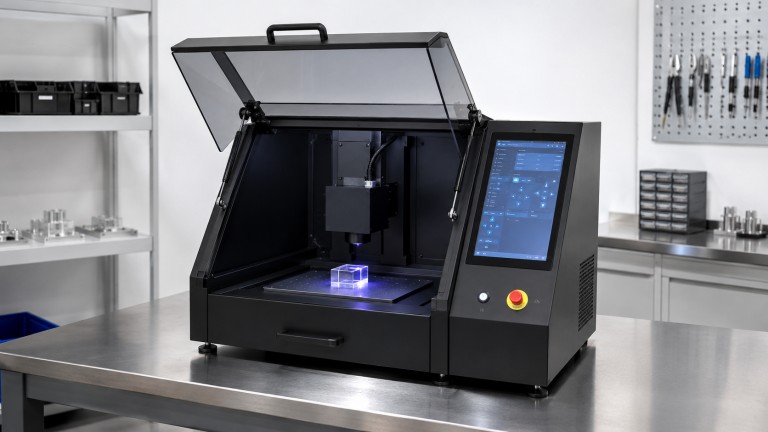
Configuration B — Desktop Workstation
Self-contained marking station for batch production, R&D, or multi-SKU environments where flexibility outweighs throughput volume. Operator-controlled with full software interface.
- Complete enclosed system — controller, galvo head, and workbed in one unit
- Rotary axis attachment available for cylindrical objects (bottles, tubes)
- Class 1 laser safety enclosure — no PPE required for operators
- Job changeover in under 60 seconds via software preset recall
- Ideal for prototyping, short runs, and mixed-material marking
Production Line Integration & Software Connectivity
Every Kales CO2 marking system ships with embedded control technology for direct network integration. EtherNet/IP connectivity allows seamless communication with existing PLCs — no custom programming or middleware required. Variable data (serial numbers, QR codes, GS1 DataMatrix, lot numbers, expiry dates) is generated and queued in real time from your ERP or MES system.
The marking software supports unlimited font libraries, code standards including GS1-128, DataMatrix, QR Code, and Aztec, plus 2D marking field correction for consistent quality across the full field area. Remote diagnostics are available over Wi-Fi or cellular for 30W and above models.
Built for the Marking Demands of Three Critical Industries
CO2 laser marking has become the preferred traceability solution in industries where permanent codes, regulatory compliance, and high-speed production are non-negotiable requirements.
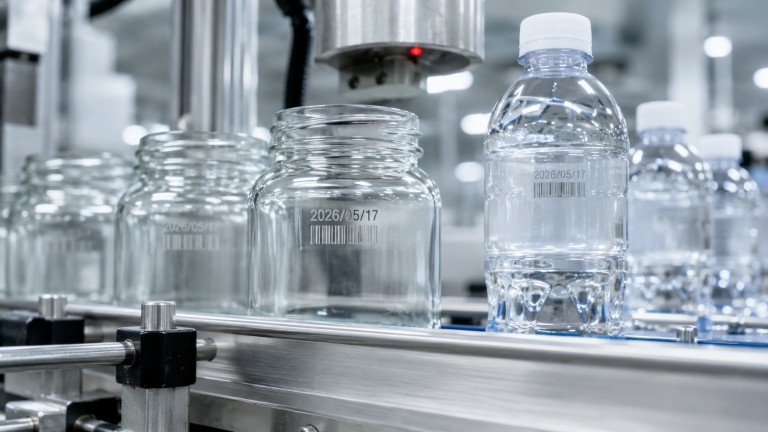
Food & Beverage Packaging
Mark expiry dates, production timestamps, batch codes, and traceability barcodes on PET bottles, glass jars, flexible film, cartons, and aluminum cans — without ink contamination risk. Handles high-humidity and washdown environments.
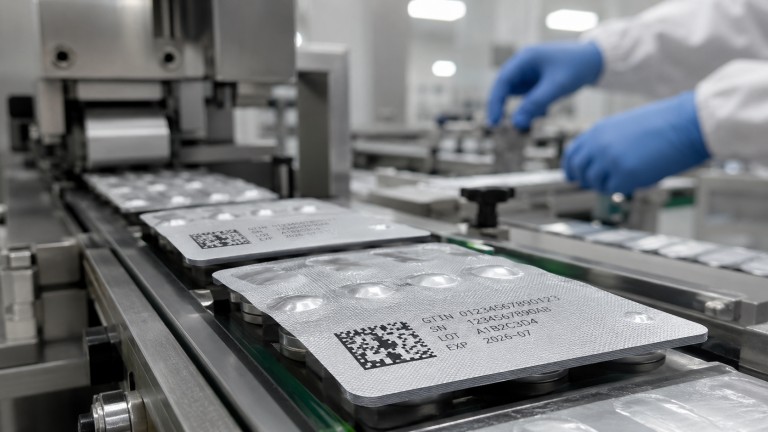
Pharmaceutical & Medical Device
Serialized marking on blister packs, glass ampoules, PVC/PET packaging, and folding cartons. Supports "one item, one code" traceability and integrates with national drug traceability platforms. IQ/OQ documentation available for GAMP 5 compliance.
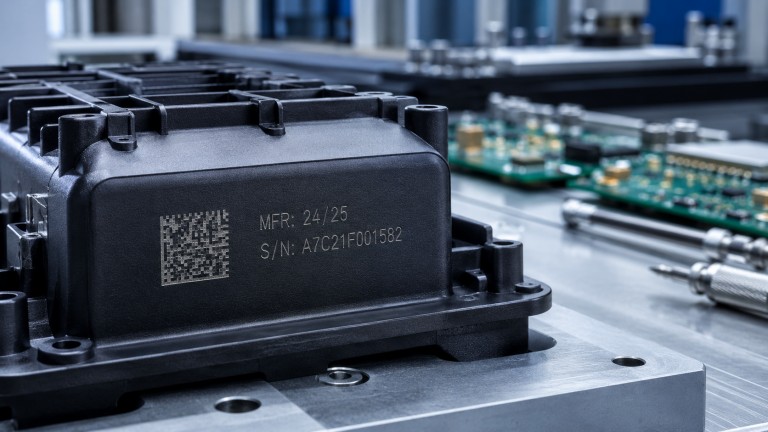
Electronics & Industrial Components
Mark plastic housings, PCB labels, cable sleeves, rubber seals, and ceramic components with serial numbers, QR codes, and 2D traceability marks. Non-contact process eliminates mechanical stress on sensitive components.
Material Compatibility Note
CO2 laser marking at 10.6µm wavelength is optimized for non-metallic and organic materials: plastics (ABS, PET, PVC, PE, PP, HDPE, acrylic), glass, wood, leather, paper, cardboard, rubber, ceramics, and coated or anodized metals. For marking bare metals including stainless steel, aluminum, titanium, and copper, Kales recommends a fiber laser system. Our engineering team will confirm material compatibility at no cost before any purchase commitment.
From Inquiry to Production in Five Steps
Every Kales CO2 laser marking system is configured, tested, and validated against your specific application before shipment. No generic off-the-shelf configurations.
Application Review & Material Testing
Submit your material samples and production requirements. Our engineering team conducts free marking tests and confirms wavelength compatibility, power selection, and marking field size.
System Configuration & Quotation
We configure the correct power level, lens, marking field, and integration options (inline vs workstation, EtherNet/IP, rotary axis, fume extraction) and issue a detailed technical quotation.
Manufacturing & Quality Inspection
Every system is assembled with RF metal tube source and undergoes full burn-in testing, beam quality verification, and speed/precision validation before packaging. FAT documentation available on request.
Installation & Line Integration
On-site installation, PLC wiring, encoder synchronization, and software commissioning. We validate mark quality at full line speed before sign-off. IQ/OQ documentation supplied for pharma clients.
Operator Training & Ongoing Support
Hands-on operator training, software walkthrough, and preventive maintenance schedule. Remote diagnostics via Wi-Fi/cellular. Spare parts stocked locally for rapid response across North America and Europe.
Standard lead time from confirmed order to delivery: 15–25 business days for stock configurations; 30–45 days for custom inline integration builds. Expedited production available for critical line installations. Contact us with your timeline and we will confirm feasibility within 24 hours.
Frequently Asked Questions
The fundamental difference is wavelength. CO2 lasers operate at 10.6µm, which is highly absorbed by organic and non-metallic materials — plastics, glass, wood, leather, paper, ceramics, and rubber. Fiber lasers operate at 1.06µm, which is absorbed by metals such as stainless steel, aluminum, and titanium. If your application involves non-metal packaging, components, or labels, a CO2 laser is the correct choice. If you need to mark bare metal parts directly, a fiber laser is required. For mixed-material lines, Kales offers both technologies.
RF (radio-frequency) metal tubes and DC-excited glass tubes are two fundamentally different laser excitation technologies. RF tubes deliver a service life of 20,000 hours versus approximately 2,000 hours for glass tubes — a 10× difference. RF tubes also produce marking speeds up to 10,000 mm/s compared to 1,200 mm/s for glass, and achieve 0.01mm precision versus 0.05mm. Critically, RF tubes maintain consistent output power throughout their service life, while glass tubes experience progressive power decay. All Kales CO2 systems use RF metal tubes exclusively. We do not offer glass tube configurations for industrial applications.
Yes. The KL-CO2-30 and higher models support EtherNet/IP, Modbus TCP, and RS-232 communication, allowing direct integration with PLCs, ERP systems, and MES platforms without custom middleware. The flying-laser configuration synchronizes marking to your conveyor encoder signal, enabling on-the-fly marking at full line speed. Kales provides engineering support for line integration, including PLC ladder logic, trigger signal wiring, and software variable data configuration. Most inline integrations are commissioned within one to two days on site.
Yes. CO2 laser marking is non-contact and consumable-free, eliminating ink migration and solvent contamination risk — a critical requirement for GMP-compliant pharmaceutical environments. For pharmaceutical serialization, our systems support GS1 DataMatrix, securPharm, HIBCC, and ICCBBA code standards, and IQ/OQ documentation is available for GAMP 5 validation. For food and beverage packaging, our systems comply with FDA 21 CFR and EU regulation 1169/2011 requirements for date coding and traceability.
A CO2 laser marking system has a higher upfront capital cost than a CIJ inkjet printer, but significantly lower operating costs over a 3–5 year period. Laser systems require no ink, solvent, nozzle cleaning kits, or filter replacements. The RF tube is rated for 20,000 hours with minimal maintenance. For production lines marking 50,000+ products per day, the TCO payback period is typically 18–30 months. Lines with multiple inkjet units often see payback in under 18 months after consolidating to a single laser system. Request our TCO comparison worksheet for your specific line volume.
CO2 lasers at 10.6µm are not suitable for marking bare metals (stainless steel, aluminum, copper, brass, titanium) because the wavelength is largely reflected rather than absorbed. Highly transparent materials such as clear glass may require surface treatment or a frosting agent to achieve visible contrast. Some high-reflectivity polished metal surfaces and certain thermally sensitive materials may also require a different laser technology. Kales provides free material testing — submit a sample and we will confirm suitability and provide marked samples before any purchase decision.
Zero Consumables. Permanent Marks. Industry-Ready.
Get a CO2 laser marking system configured for your materials, line speed, and compliance requirements — backed by free application testing and hands-on integration support.
Our engineering team will review your application, conduct marking tests on your samples, and provide a full technical proposal within 48 hours of inquiry.